The education arm of an independent soil-science consultancy
Ekodama Academy turns years of carbon-project field experience into self-paced courses. It is built by Ekodama, an independent scientific consultancy working at the intersection of soil health, soil carbon, biomass, and agroforestry, so the methods you learn here are the same ones we use on client projects.
- Courses
- 10
- Lessons
- 65
- Material
- 48 h
- Format
- Self-paced
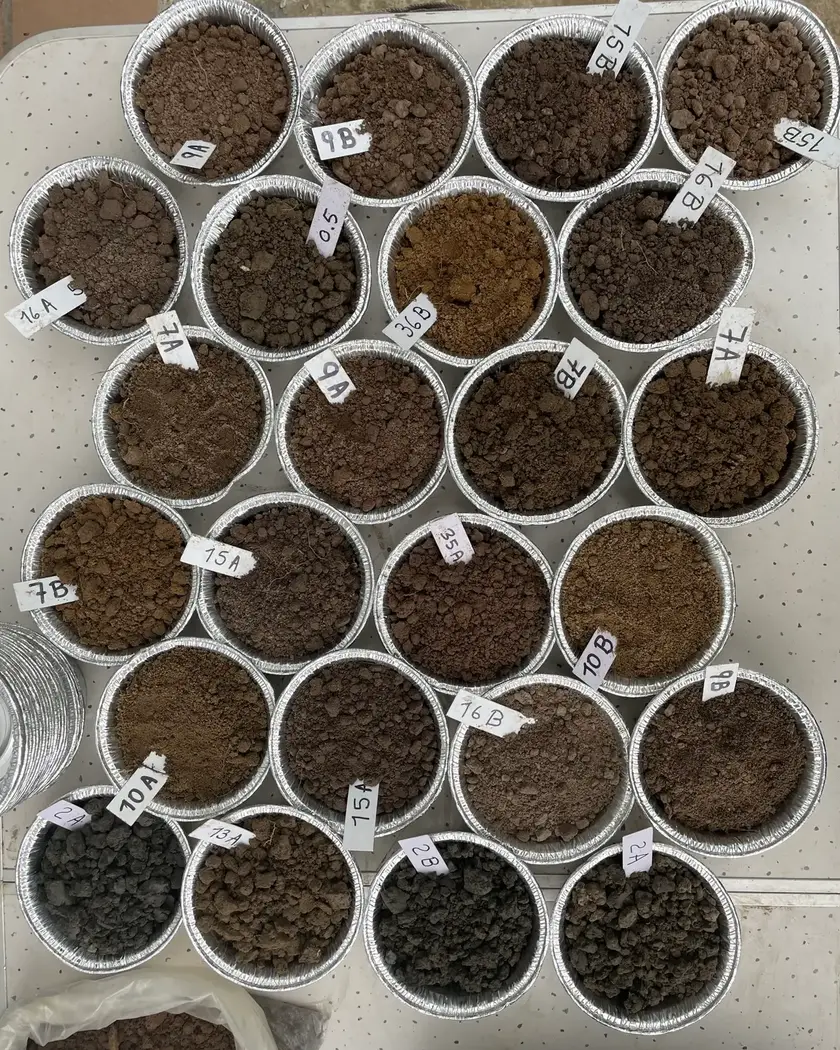
Why the Academy exists
The soil-carbon economy is growing faster than the pool of people trained to do its fieldwork and accounting well.
The gap is rarely enthusiasm. It is craft: how to place cores so a change is detectable, which allometric equation fits your species, how to defend a model to a verifier, and when a practice claim is real versus oversold.
That craft usually lives in a handful of practitioners' heads and a scatter of dense standards documents. The Academy writes it down, accurately and in a working practitioner's voice, and puts it in front of the agronomists, project developers, and MRV leads who need it. Ekodama does not issue professional certifications; what it offers is capability that holds up in the field and in front of an auditor.
The principles behind every course
Scientific rigor must be useful
We teach the method that survives an audit, not the one that reads well in a textbook. Complexity earns its place only when it changes a decision.
Land systems are context-specific
There is no universal protocol. Courses show you how to adapt sampling, modeling, and design to your soils, climate, and cropping system.
Independent, not sponsored
Ekodama sells no carbon credits and represents no methodology vendor. The guidance you get is the guidance we would give a paying client.
Science must translate into action
Every lesson is written to be used in the field or the spreadsheet on Monday, by working agronomists, project developers, and MRV leads.
How the courses are built
Every lesson starts from the primary sources (Verra and Gold Standard methodologies, the IPCC Guidelines, and the peer-reviewed literature), not from a summary of a summary. Each factual claim is traced to a real source and adversarially fact-checked before it ships, and the lessons carry numbered citations so you can follow any number back to where it came from.
The writing is dense and unromantic on purpose: named standards, exact numbers, and the pitfalls that actually sink projects. Where it helps, lessons include interactive elements, such as knowledge checks and calculators, so you can test your understanding rather than just read past it.
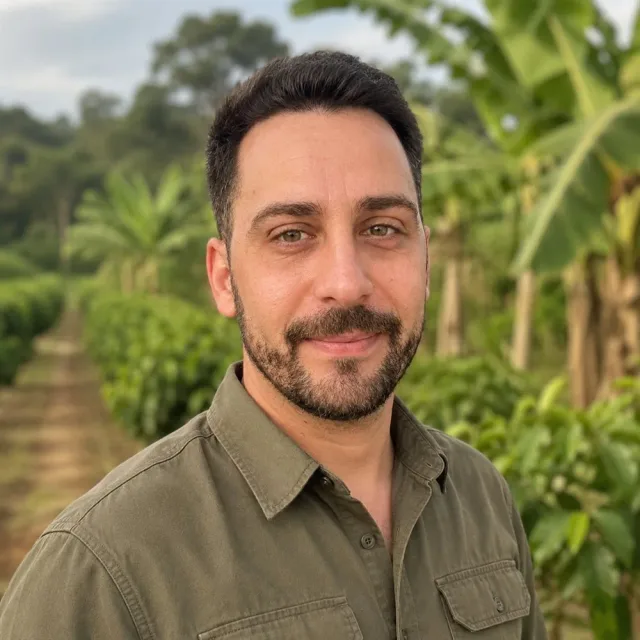
Written by Dr. Thomas Fungenzi
Founder of Ekodama. He works directly with clients on soil health, carbon and biomass assessment, sampling design, and farm-system modeling, and deliberately limits engagements each year to protect the quality of the work.
- Doctorate
- PhD, Soil carbon dynamics
- Cranfield University (UK)
- Master's degree
- MSc, Land restoration and rehabilitation
- Cranfield University (UK)
- Engineering degree
- Agricultural engineering
- UniLaSalle (France)
One part of the Ekodama Lab
The Academy sits alongside a set of tools Ekodama is building for the same practitioners: reference, calculation, and mapping tools that pair naturally with the courses.
Map of Soil Science
LiveThe whole discipline on one canvas you can pan, zoom, and search, in French and English: 10 domains and 150 entries.
Soil Photo Library
LiveDocumented soil profiles, horizons, and field features, built with the French Soil Science Society (AFES).
Solum
Private betaA guided companion to the French soil classification, from soil-pit observations to a named reference.
Soil Quest
Open prototypeAn online learning game in WRB 2022 soil classification: describe the pit, gather the clues, and work down the key, in French and English.
TreeLine
In developmentOne searchable tree carbon library, with the source, method, and uncertainty of every value.
Soil Carbon Multitool
In developmentDefensible soil carbon sampling, from field design to audit.
Square Root
In developmentWhat a management change would do to soil carbon over decades, with three published models (RothC, AMG, and ICBM).
Carbon Farm Simulator
In developmentWhere a planting or management decision would take a cocoa agroforestry farm, decade by decade.
Arbor Lab
In developmentShade and tree carbon in cocoa agroforestry, species by species, as the trees grow.
Cocoa Farm Game
In developmentRun a modern cocoa farm in the browser and see why productivity, profit, and sustainability pull apart.
Ekodama Academy
This platformThe practical craft behind the work (soil sampling, tree measurement, and modeling soil-carbon dynamics) as hands-on courses.
- See every tool on ekodama.pro
Learn the craft behind the carbon
Start with a free preview lesson in any course. No account needed.